The Theorist: Sigmund Freud
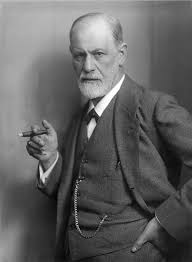 Austrian psychiatrist Sigmund Freud [1856-1939] grew up in a traditional Jewish household. He was the eldest child of eight siblings. His mother was deeply proud of her first son, believing he was destined for greatness. Freud's mother was his father's third wife.
The family had limited finances - they were forced to live in a crowded apartment in a working class suburb of Vienna. Although his father struggled with his career in the in the textile industry, he was helped by his sons from a previous marriage to provide quality education for his children.
Young Sigmund was fascinated with Greek myths and vanquishing military figures such as Napoleon and Alexander the Great. At university, he was the victim of growing anti-Semitism across Europe. Freud completed his doctoral thesis in 1881 and spent most of his life formulating his theory of psychoanalysis.
Throughout his life, Freud suffered from hypochondria and a fear of death. Through deep examination of his dreams and childhood memories, Freud came to realise an intense hostility that he felt he had towards his father. He also recalled sexual feelings for his mother, who was loving and protective. Freud collaborated with the Swiss psychiatrist Carl Jung, who was almost 20 years his junior. The pair famously split in the wake of disagreements about the role of 'libido' and the 'collective unconscious' in the human psyche - Freud stressed the importance of the former while Jung focused on the latter.
Freud was and enthusiastic cigar-smoker. In 1923 he had a tumor removed from his jaw, but continued to smoke. During his last two decades, he underwent numerous operations for cancer, and was in almost constant pain.
Freud pioneered new techniques for understanding human behaviour, and his efforts resulted in one of the most comprehensive theories of personality and psychotherapy developed.
(Roudinesco, 2017)